

01 / 03
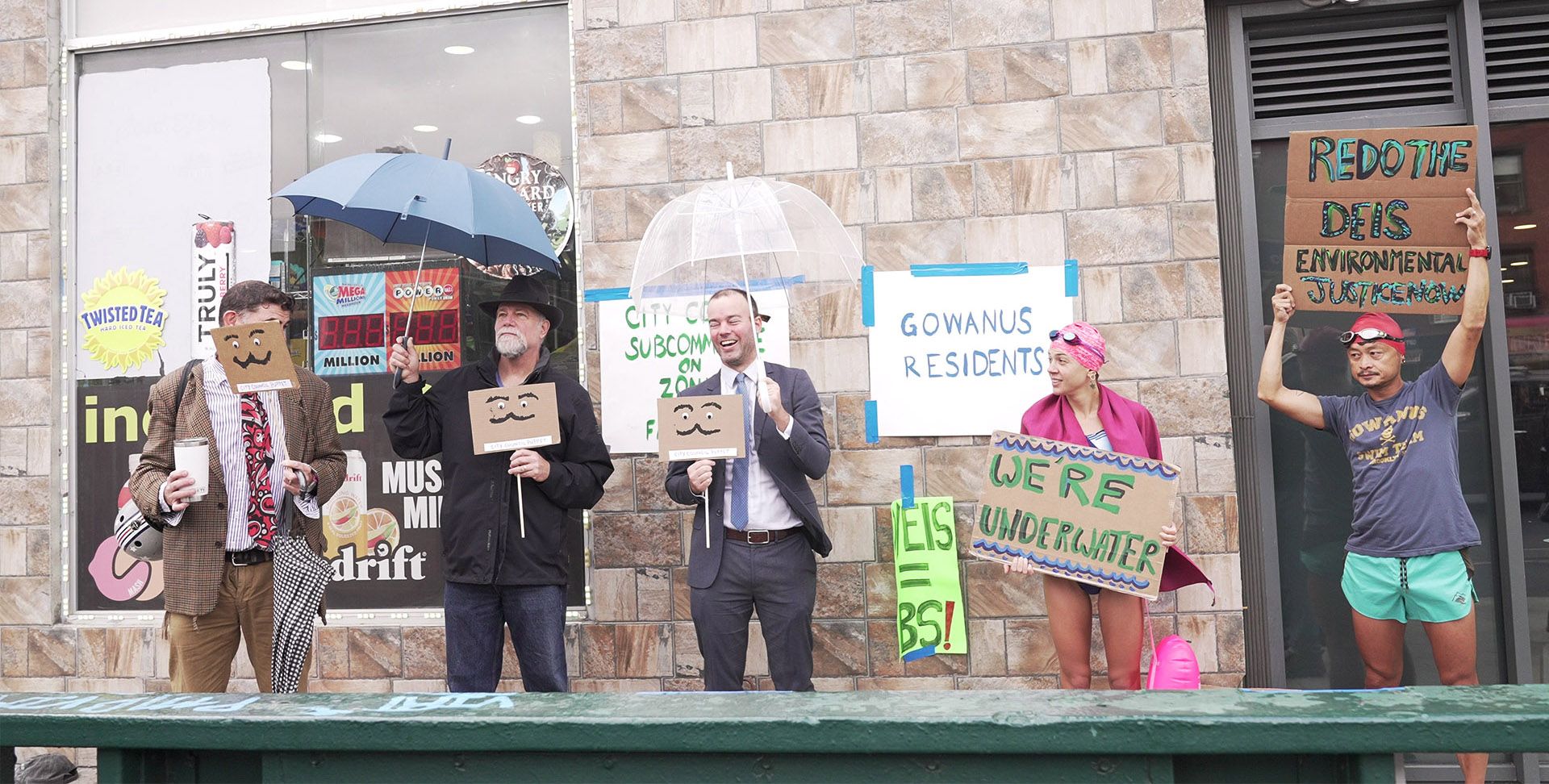
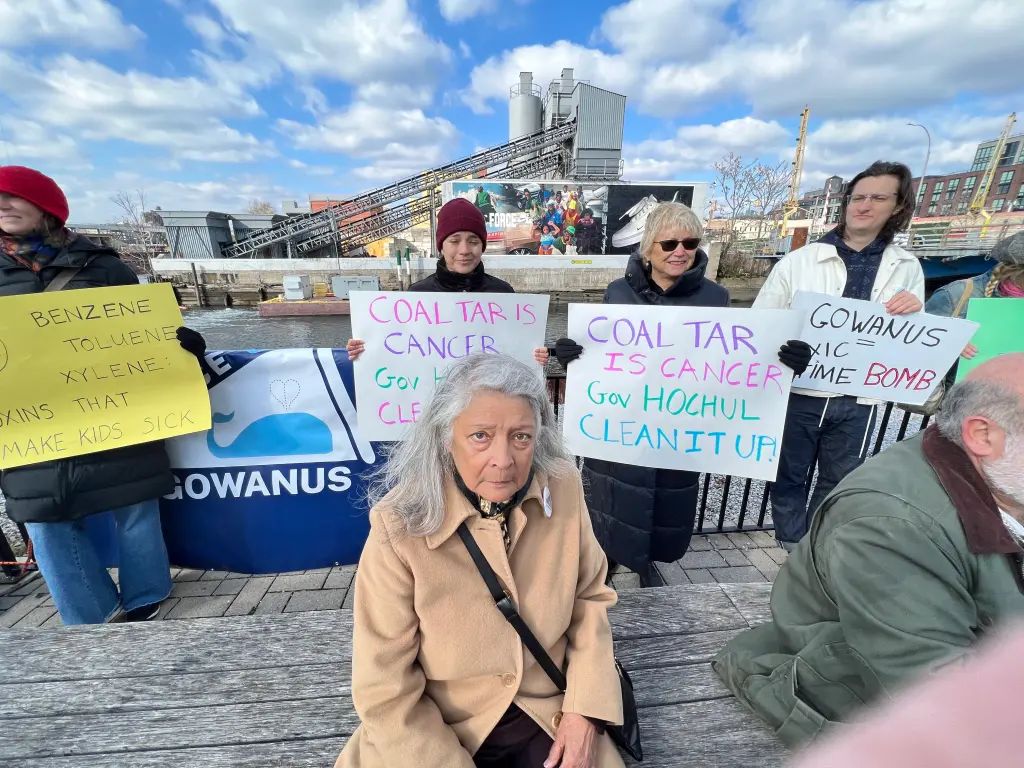
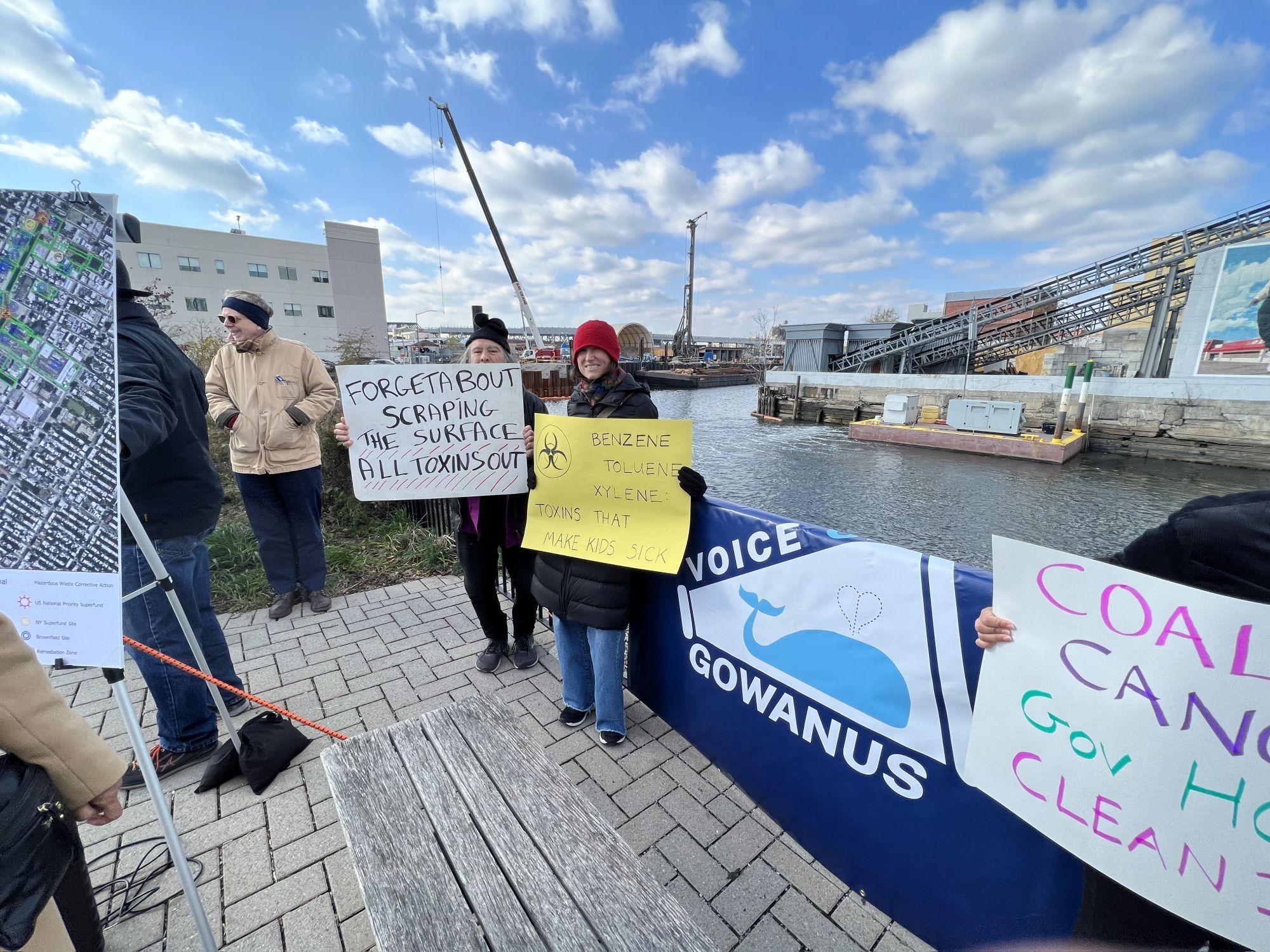
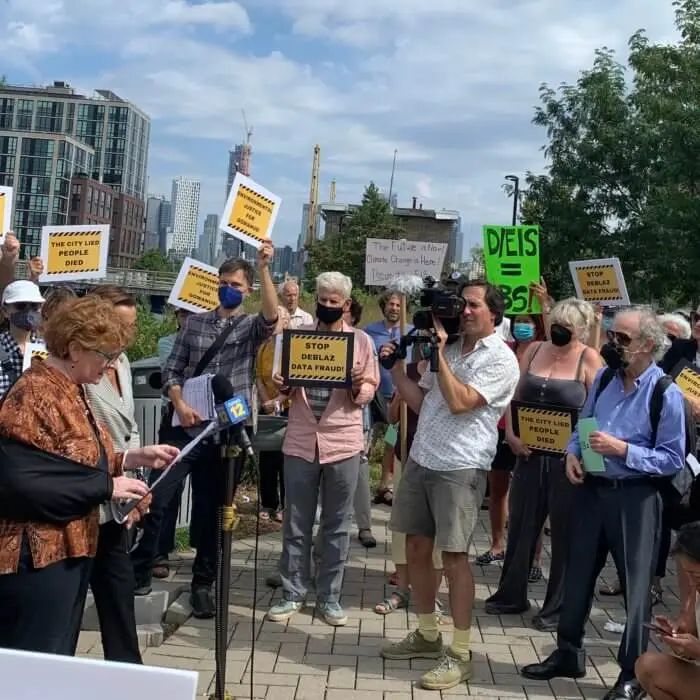
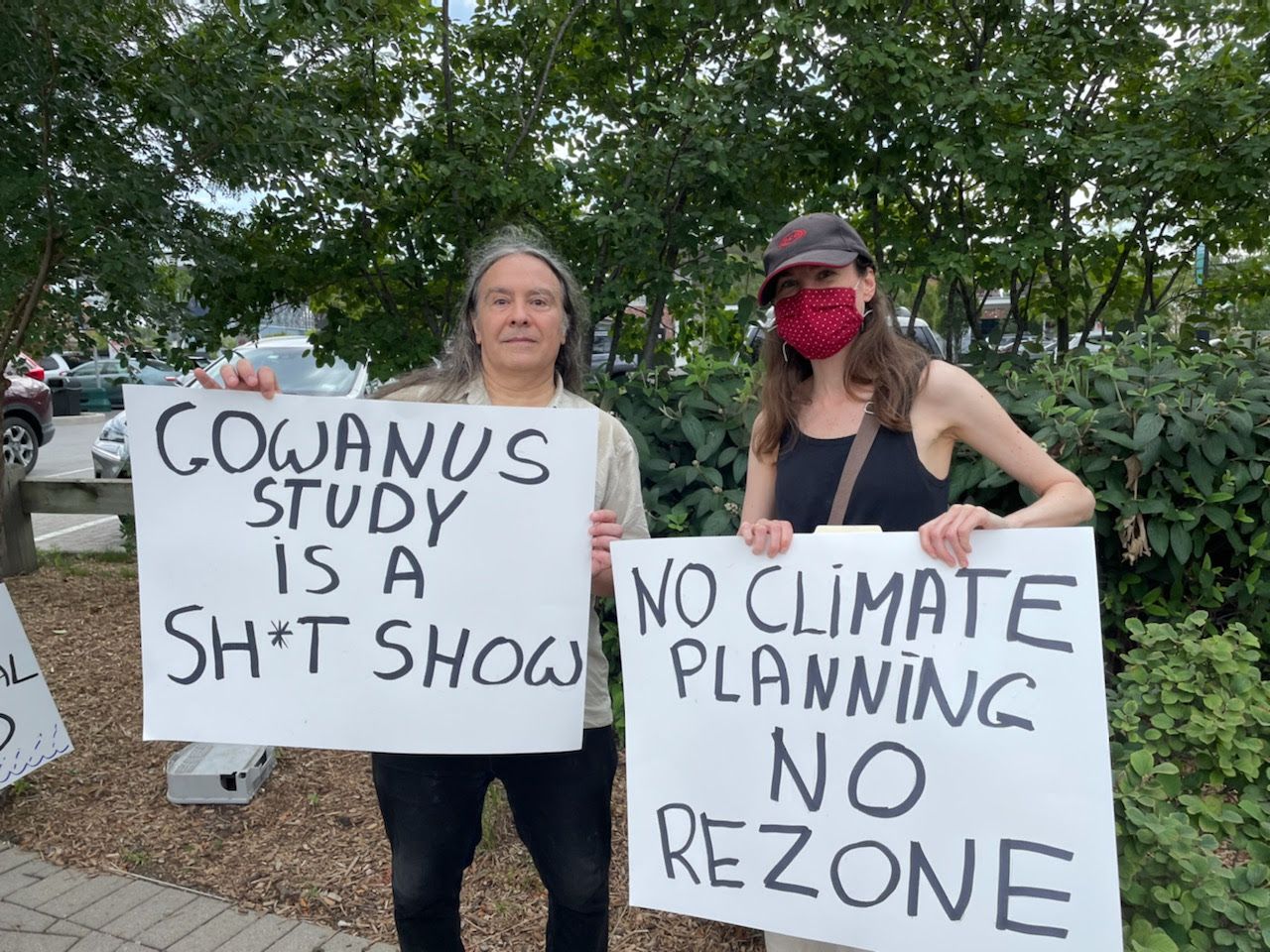
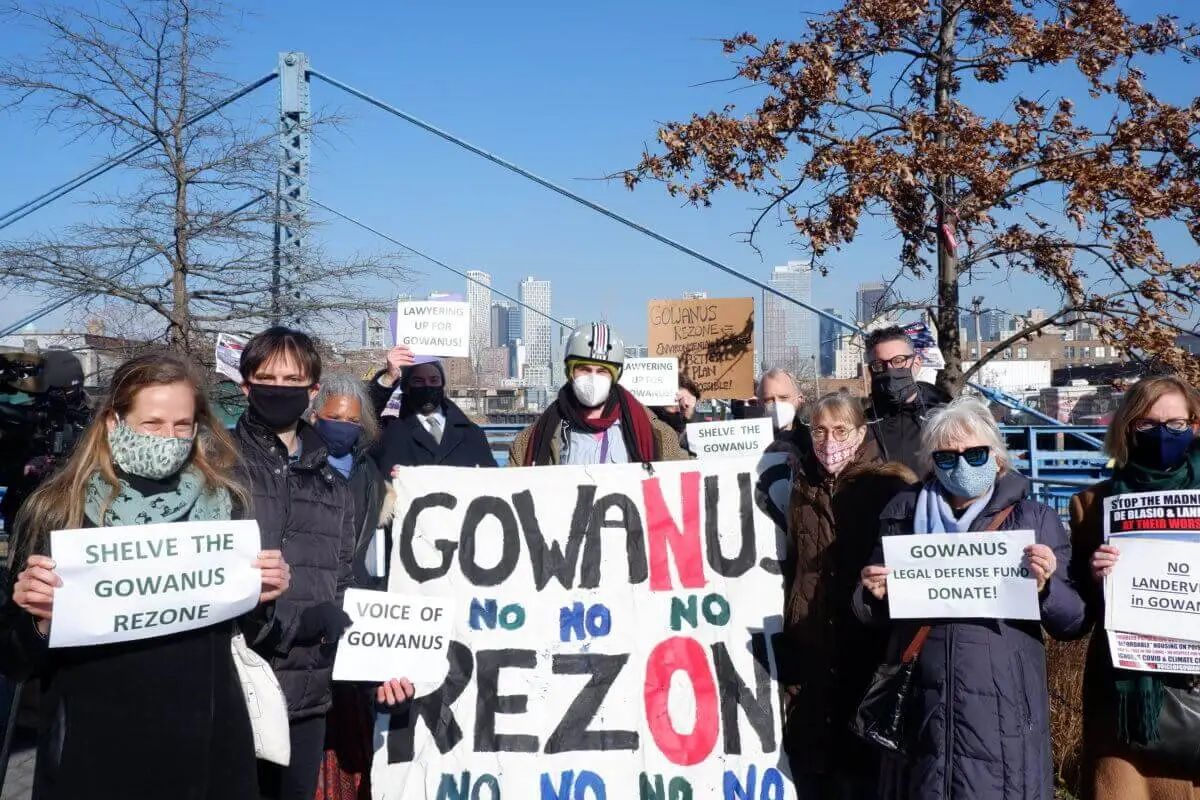
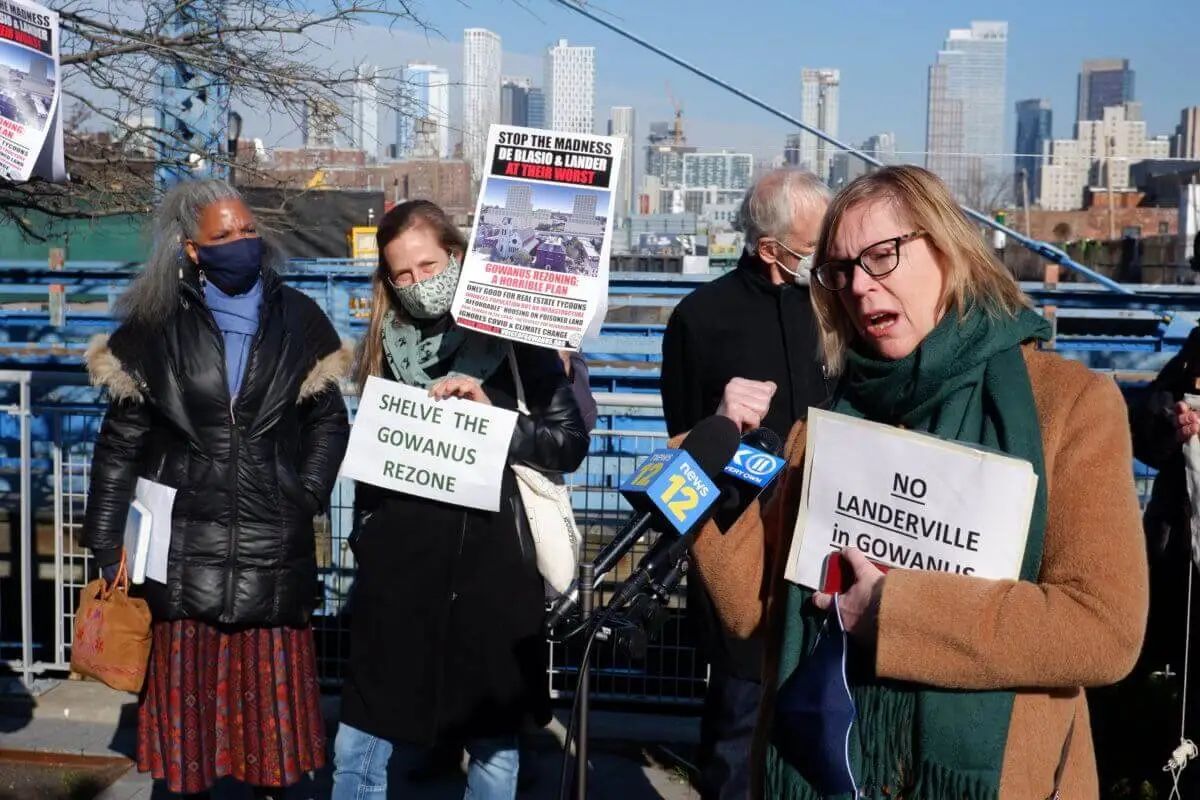
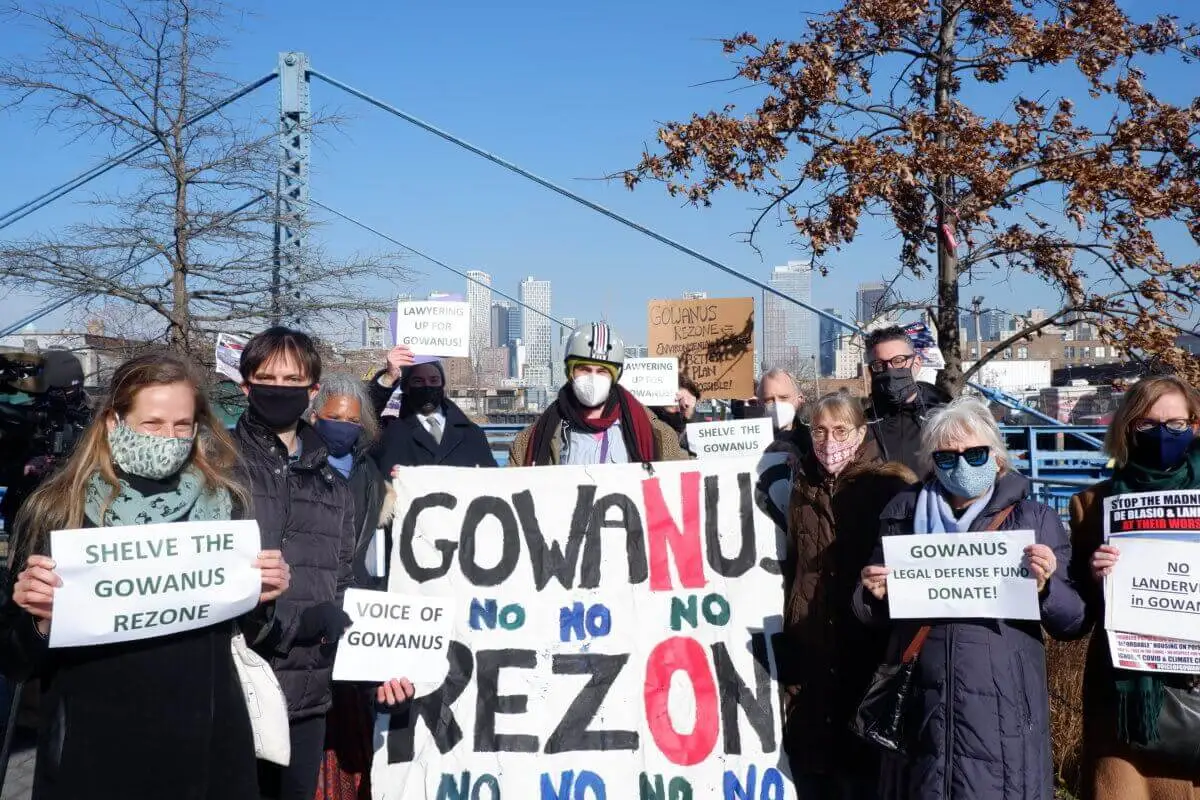
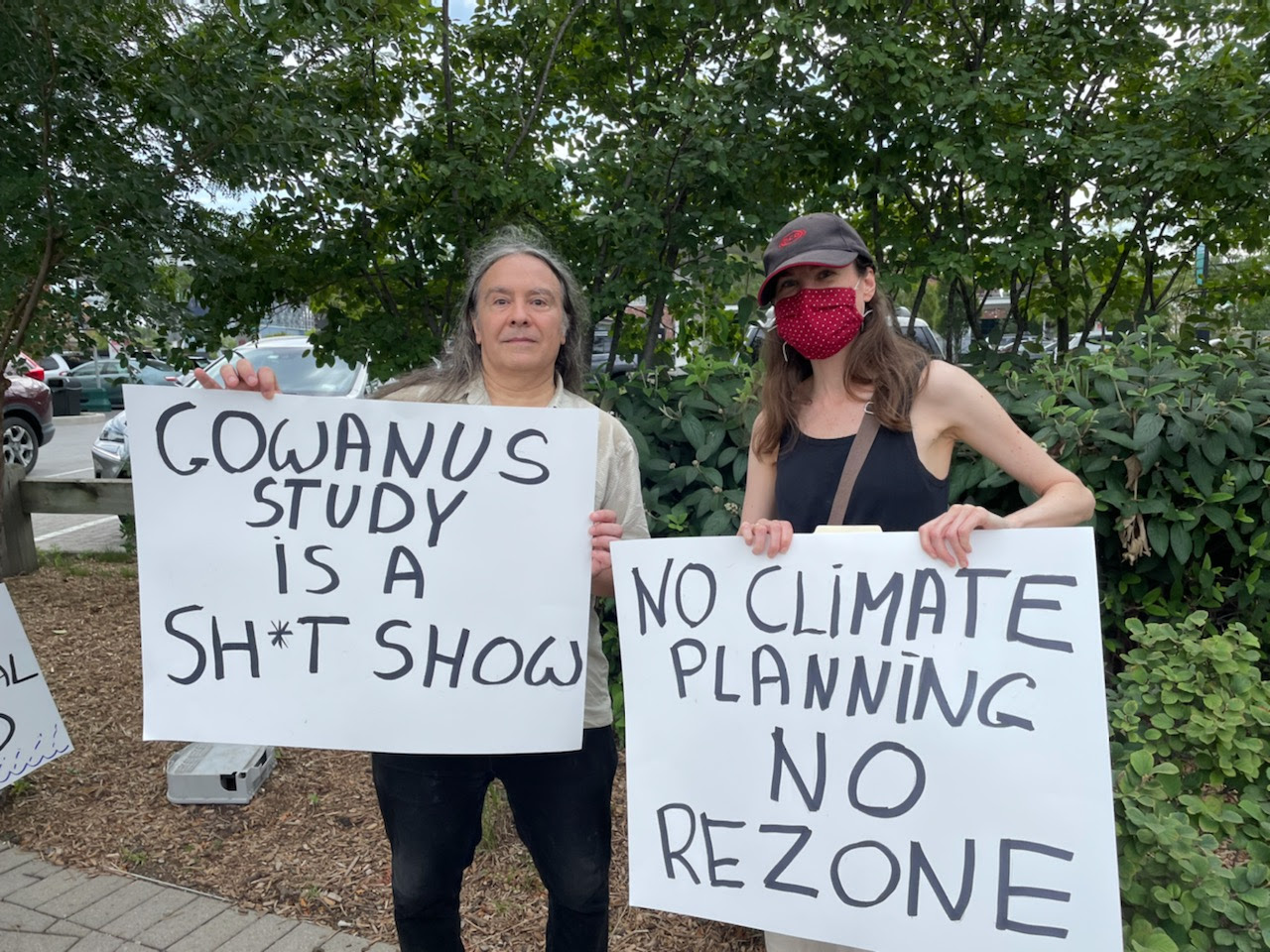
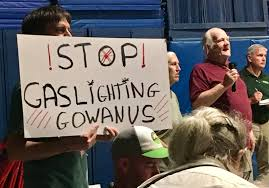
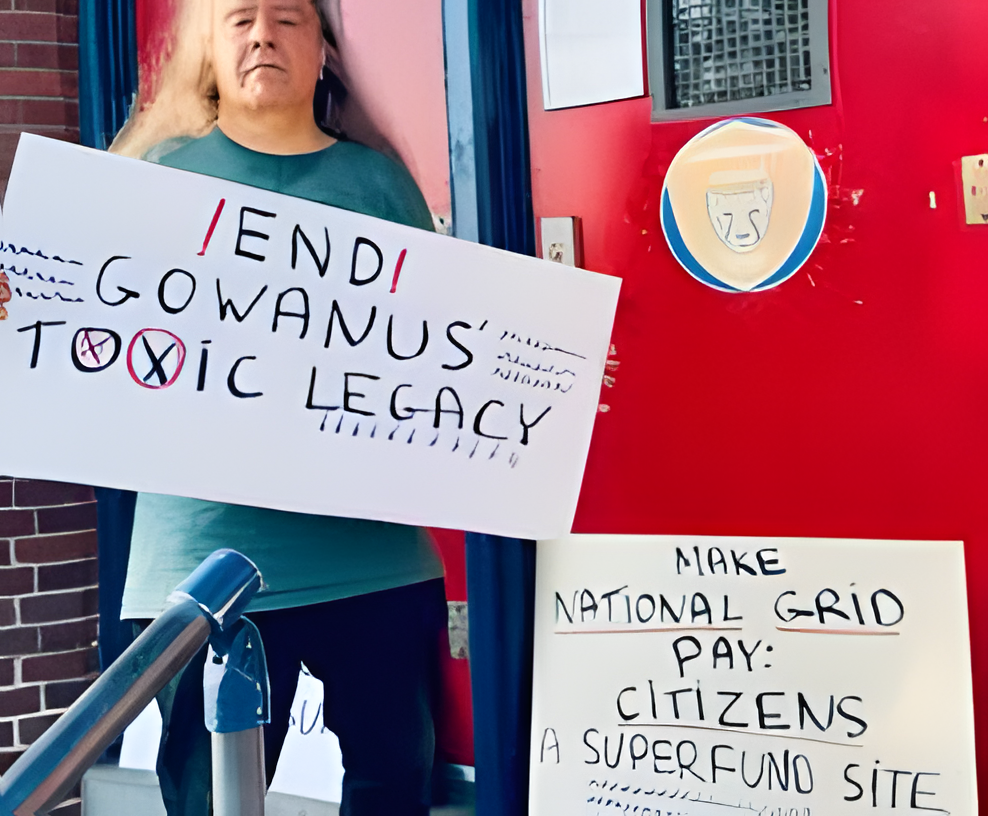
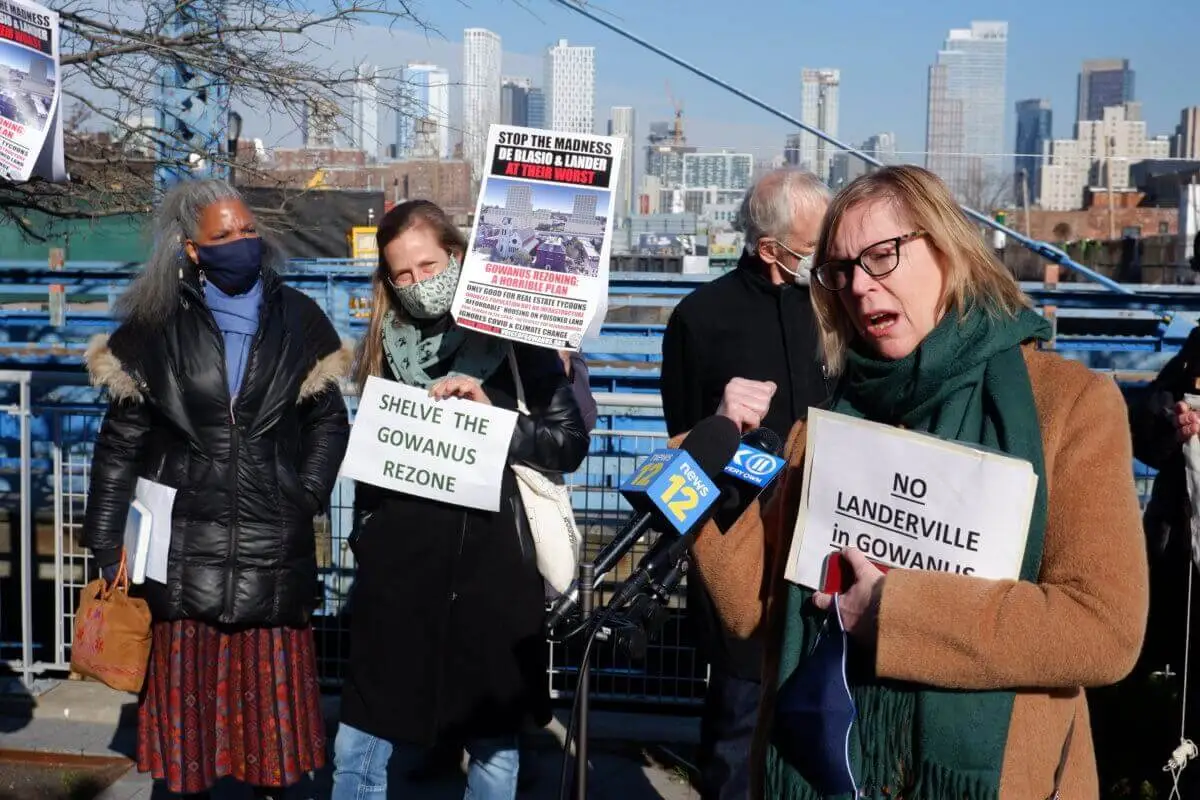
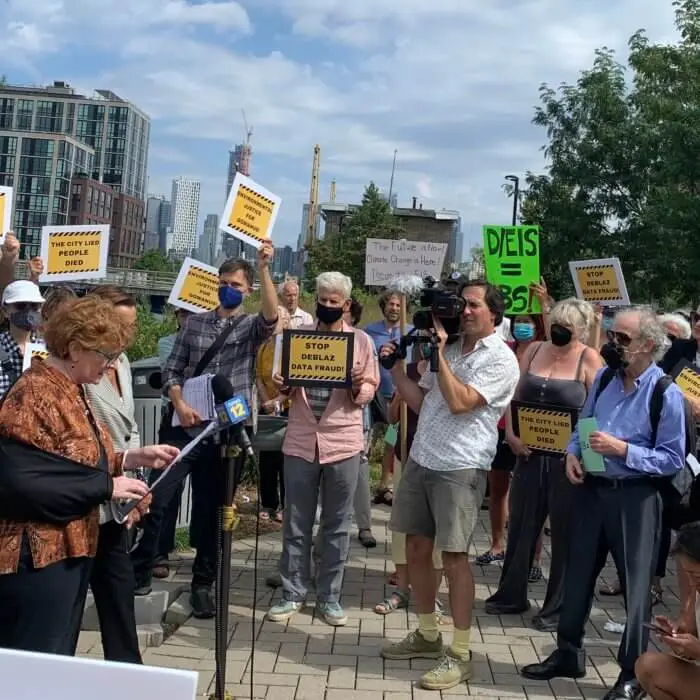
Gowanus activism was visible.
Protests, hearings, bridge actions, and public meetings made the rezoning conflict impossible to miss.
Gowanus, Brooklyn
Using Gowanus as a case study, this project asks why some forms of neighborhood advocacy stay visible but weak in policy terms, while others win funding, oversight, or enforceable concessions.
Insight
Gowanus rezoning covers more than 8,500 housing units across 82 blocks, but the rollout has been uneven. Market-rate buildings moved early and visibly. Equity-focused projects like Gowanus Green stalled on contaminated land. That split is the point: environmental risk, affordability pressure, and implementation speed have not been shared evenly. The question is who benefits first, who carries the risk, and which promised protections remain delayed.
Transformation
01 / 03
Protests, hearings, bridge actions, and public meetings made the rezoning conflict impossible to miss.
02 / 03
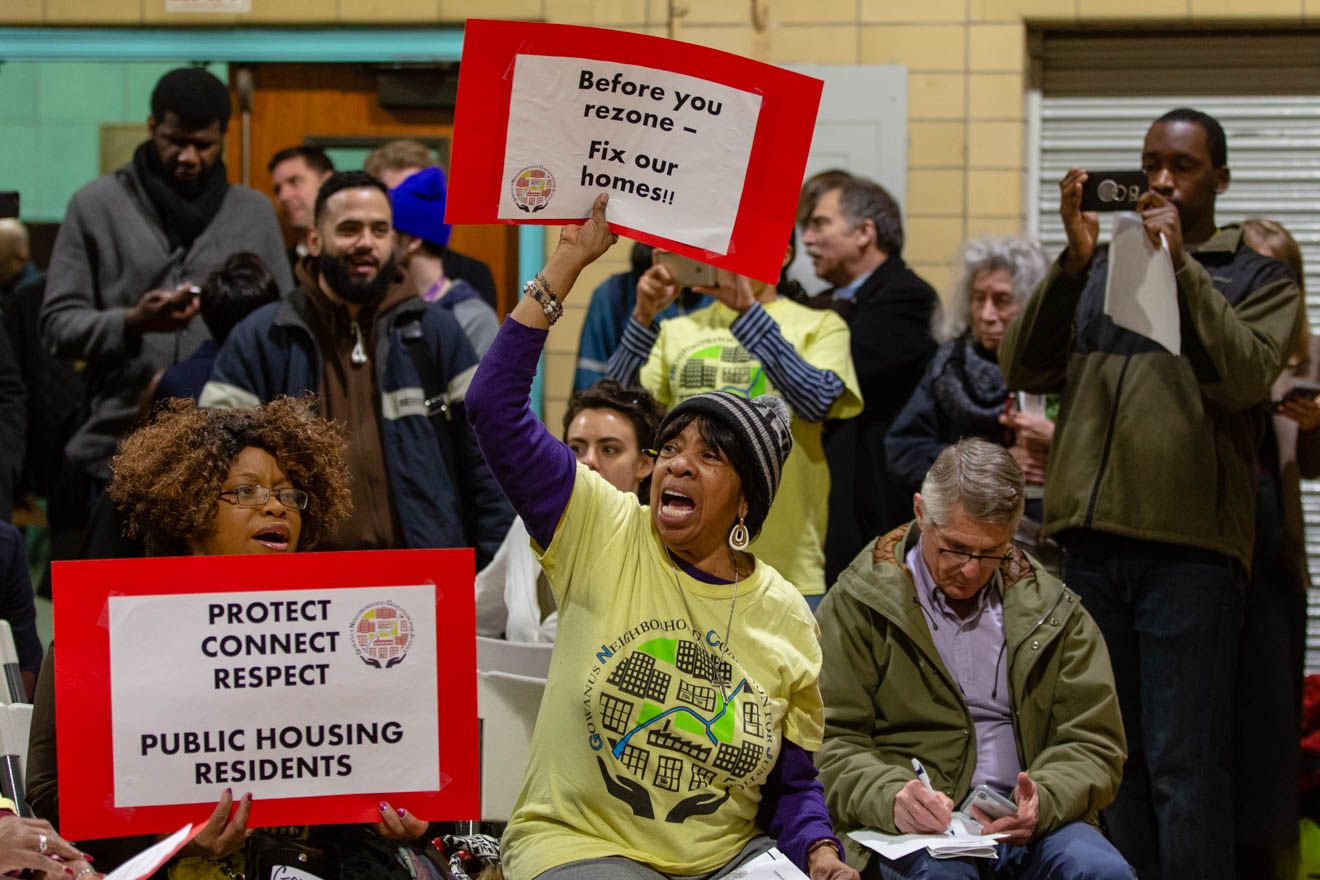
Letters, testimony, legal challenges, and protest all mattered, but they did not automatically add up to leverage.
03 / 03
Policy change often stalls not because communities lack ideas or effort, but because they lack a structured record of what has worked in similar fights.
Insight
01 / 04
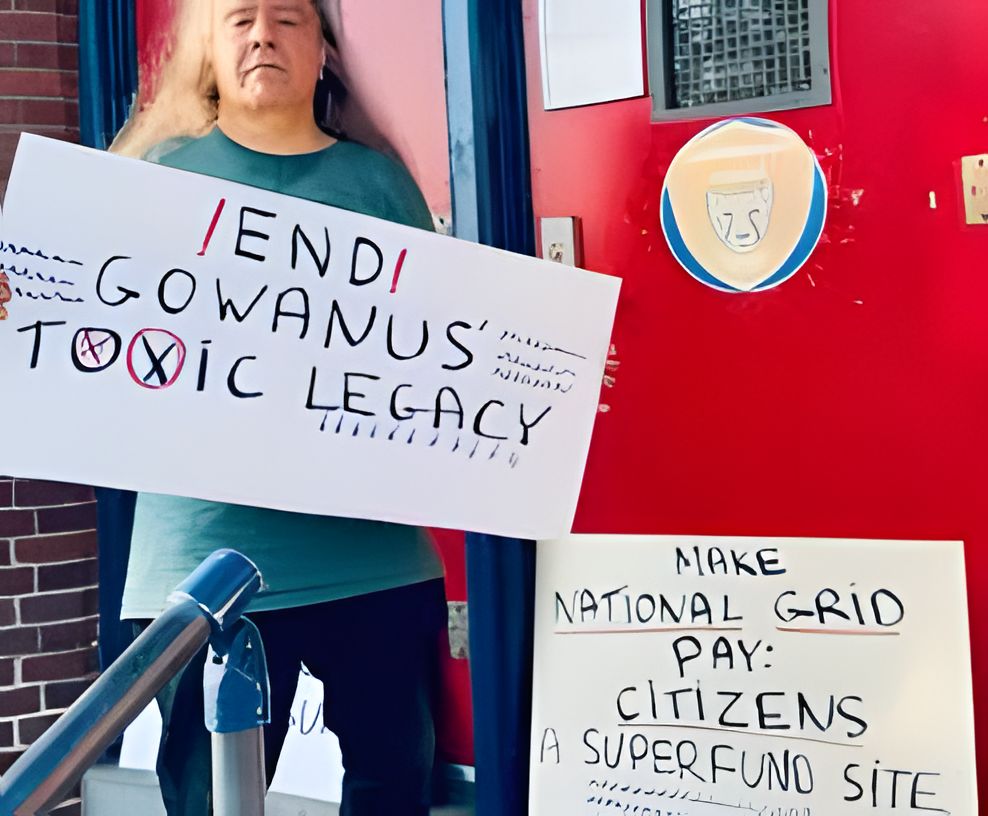
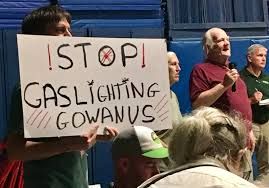
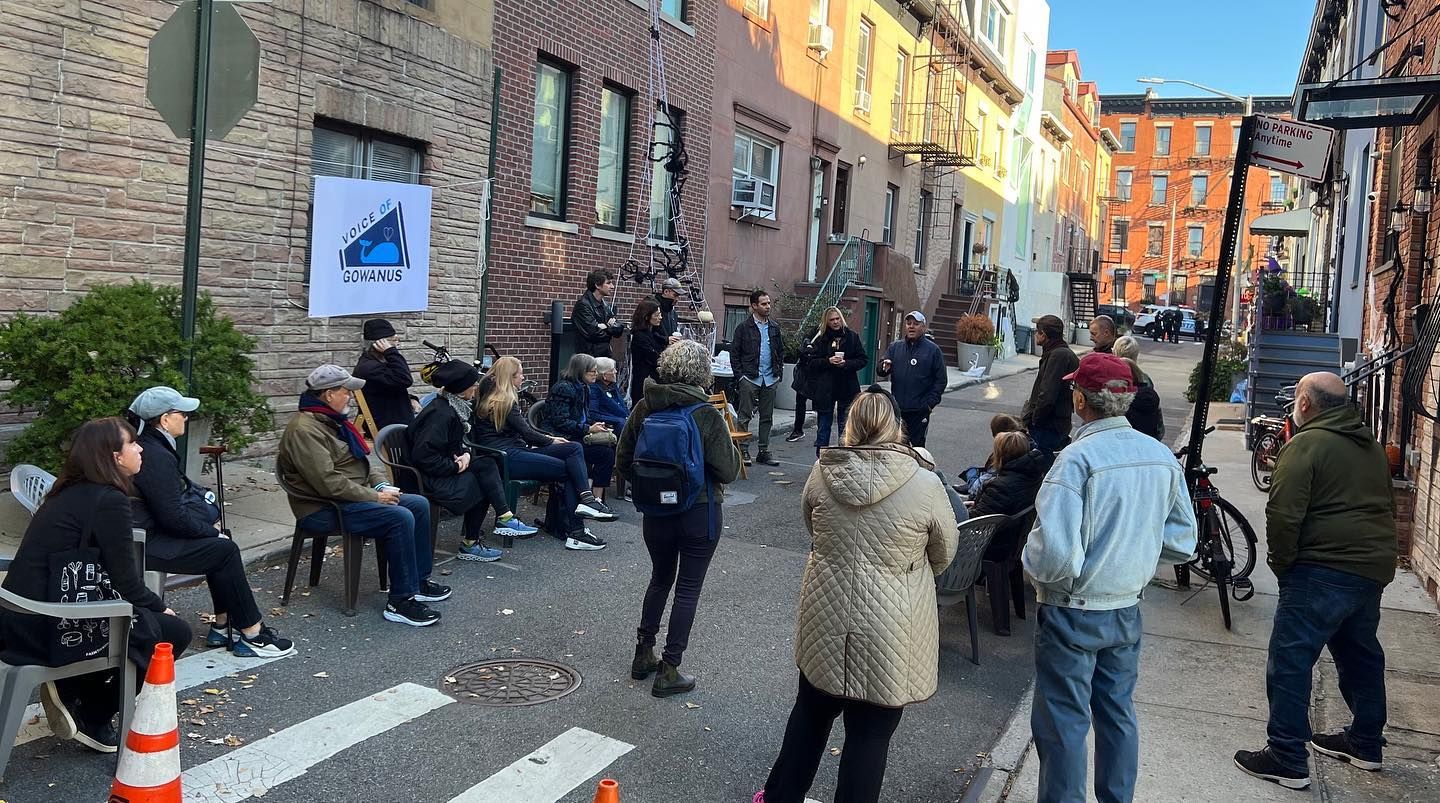
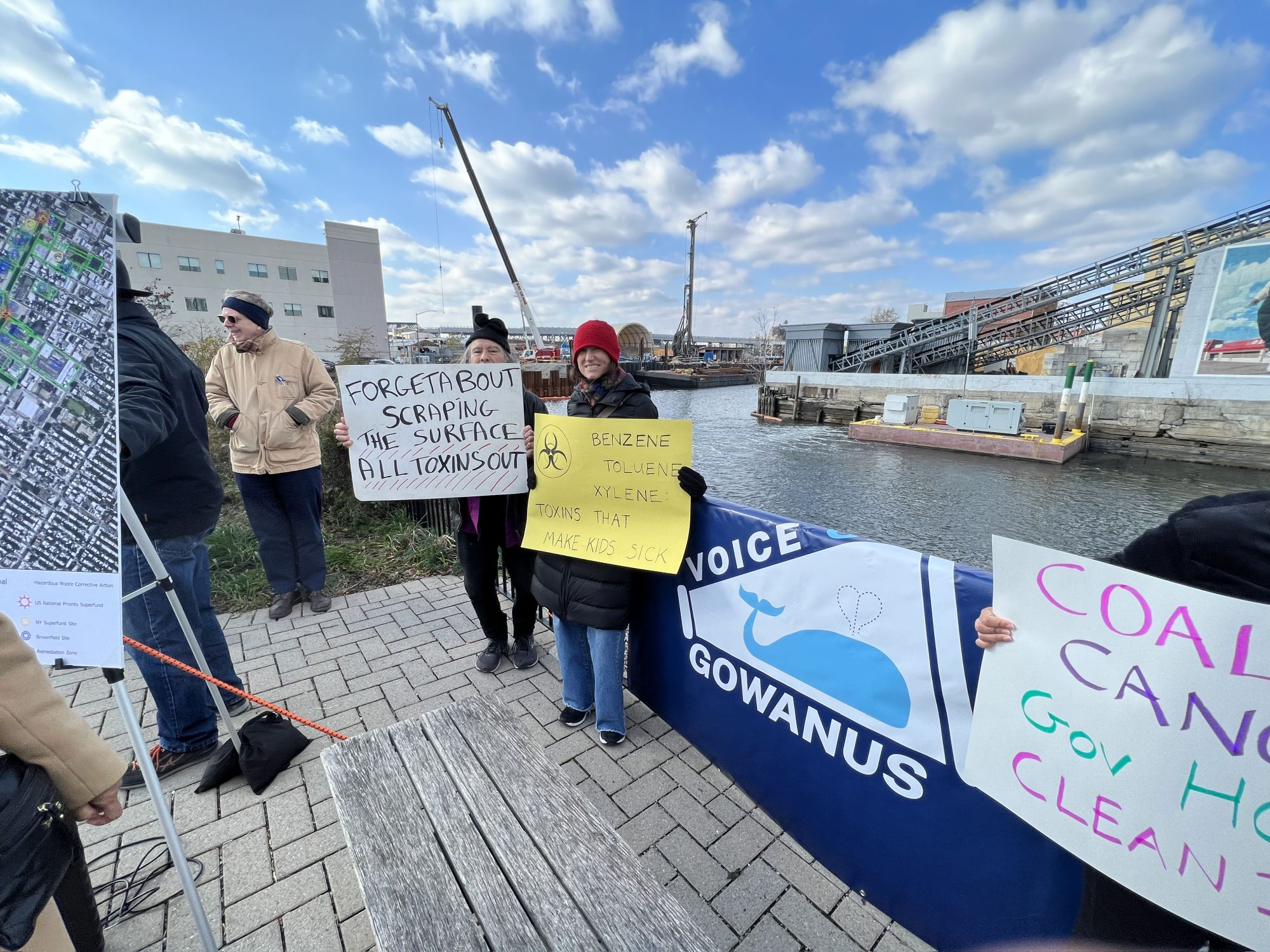
The image comes from our neighborhood interviews and shows how the case was grounded in lived experience before it was translated into policy language.

01 / 04
Sewage, overflow, pollution, and access were already part of local knowledge. The case started on the ground.
02 / 04
As redevelopment advanced along the canal, pressure rose faster than protection.
03 / 04
Affordable housing, school space, parks, and NYCHA funding became the terms communities could push and track.
04 / 04
The question is not who showed up. It is what produced a concession, commitment, or repair you can verify.
Transformation
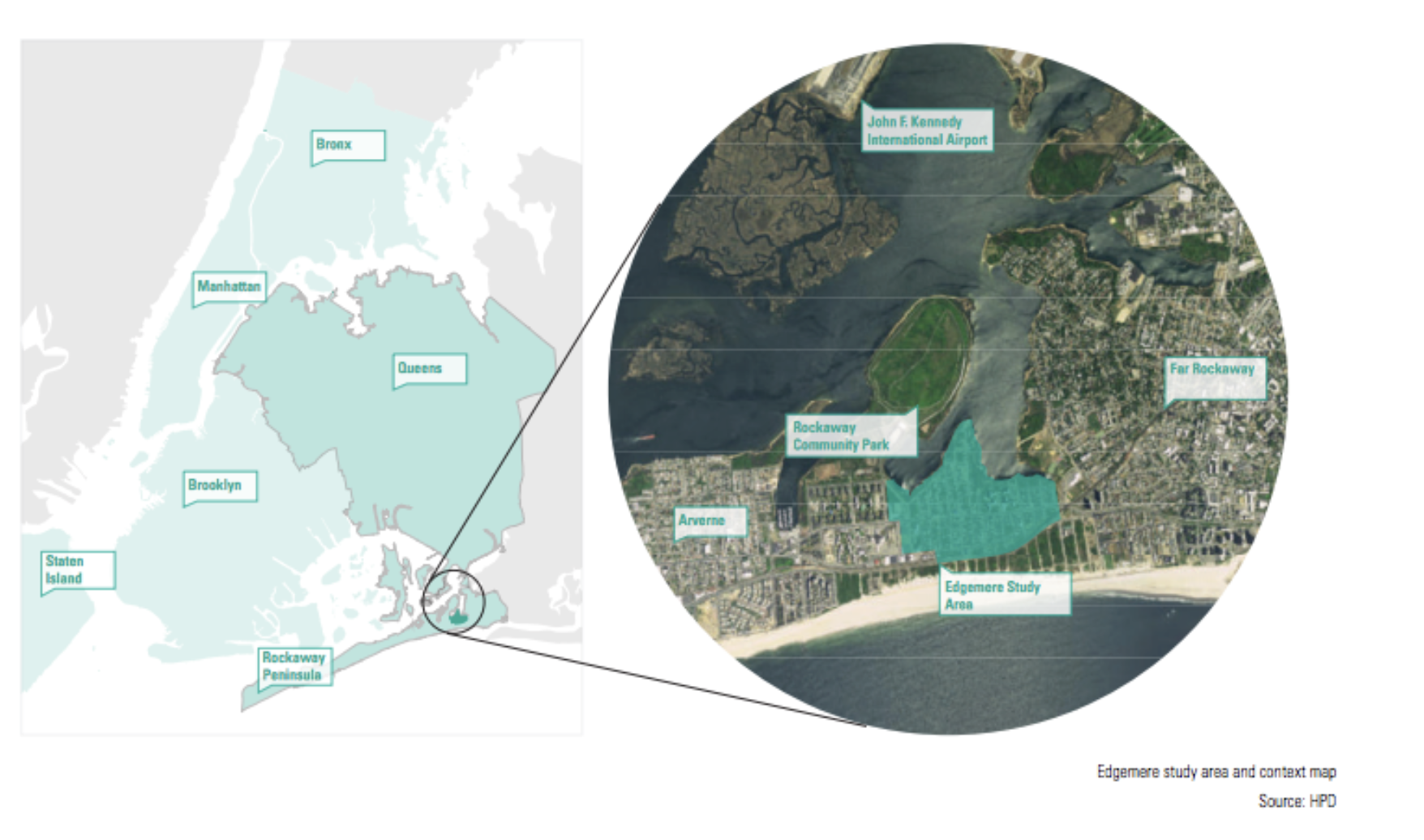
Case Study 1 / 4
It ties resilience, housing, and land strategy together from the start. That makes it a useful contrast to Gowanus.
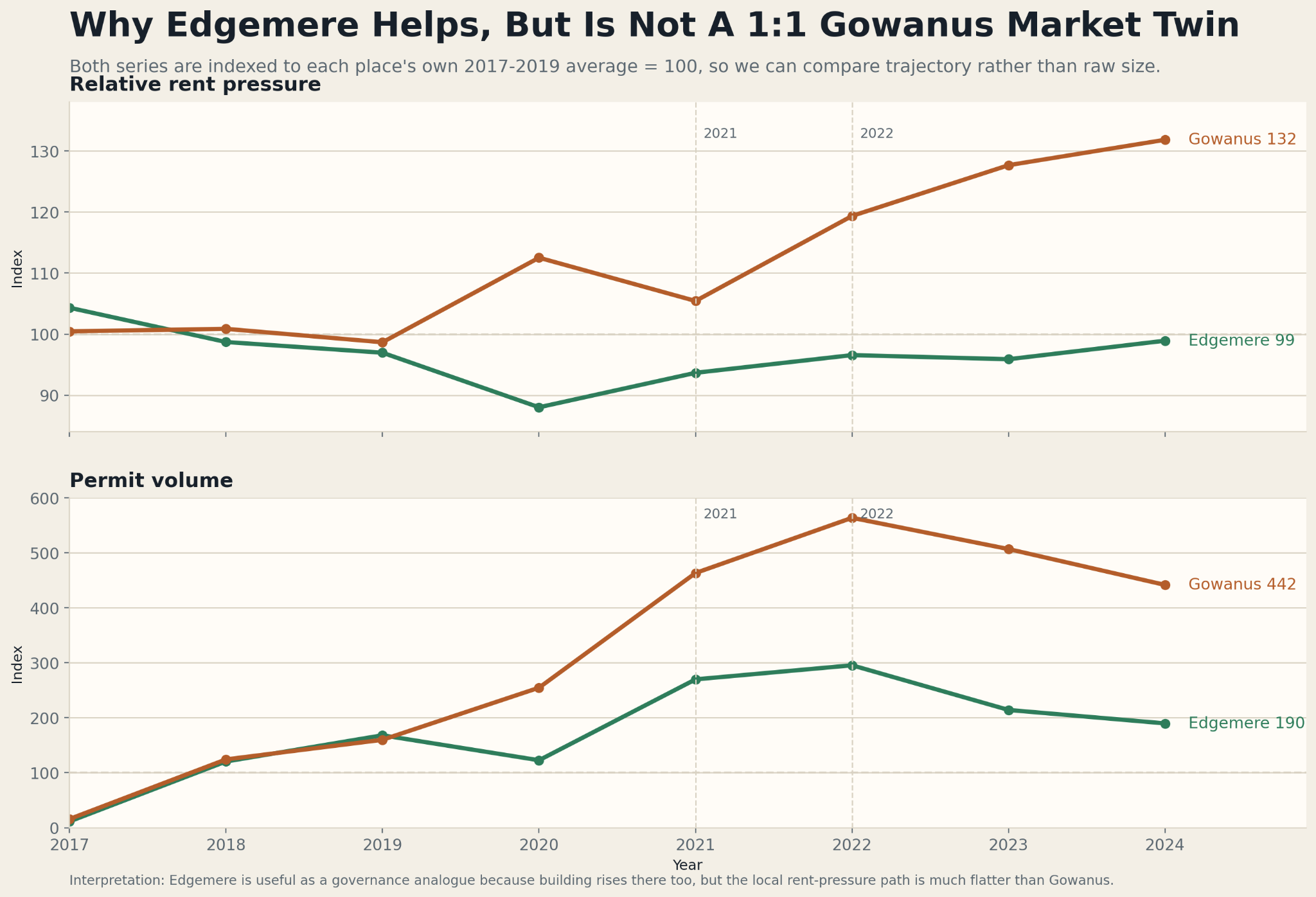
Case Study 2 / 4
Edgemere is useful because it separates growth from inevitability. Development rose, but rent pressure stayed flatter.
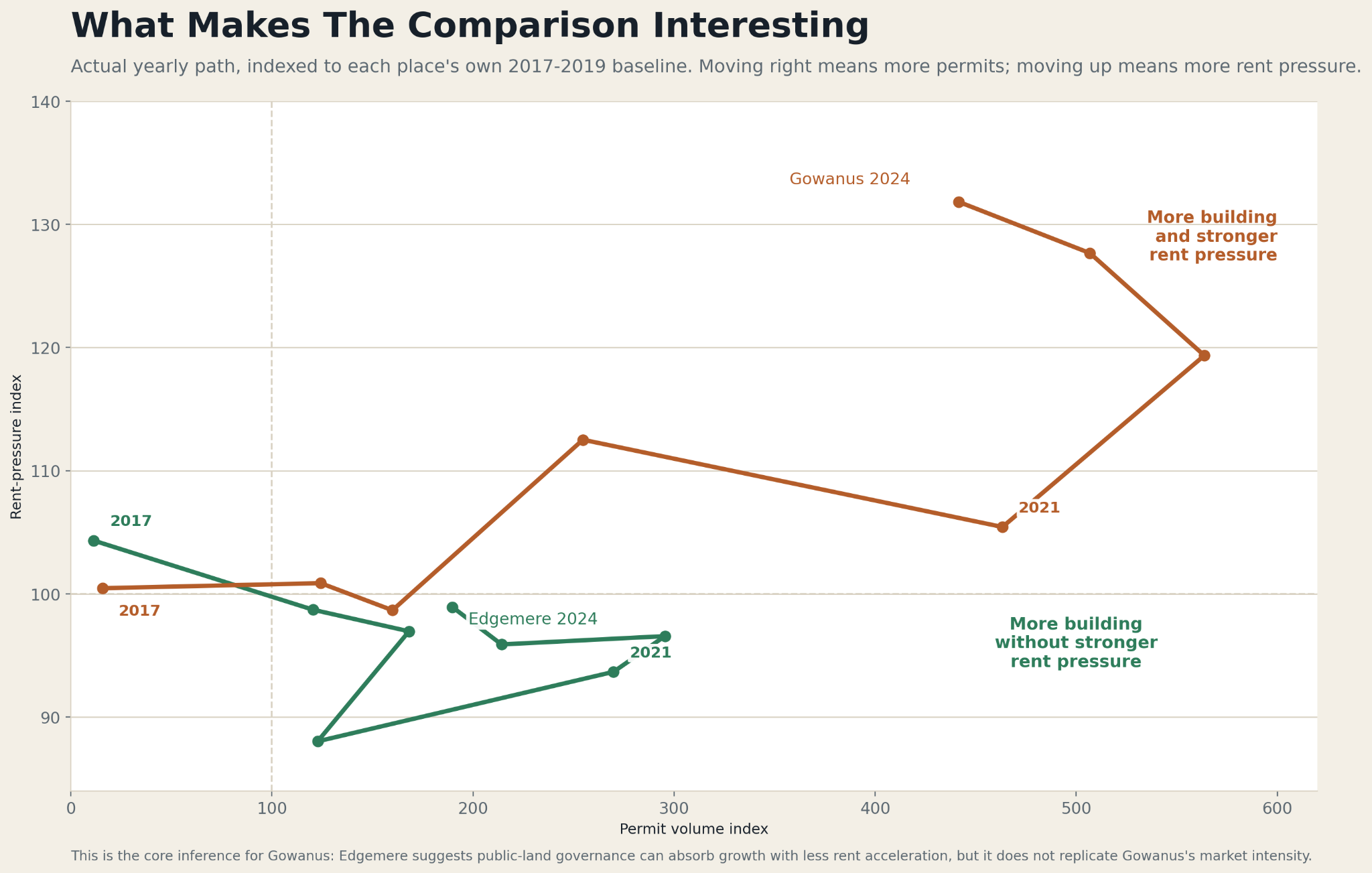
Case Study 3 / 4
Gowanus pairs new building with sharper rent pressure. Edgemere suggests that stronger intervention can change that relationship.
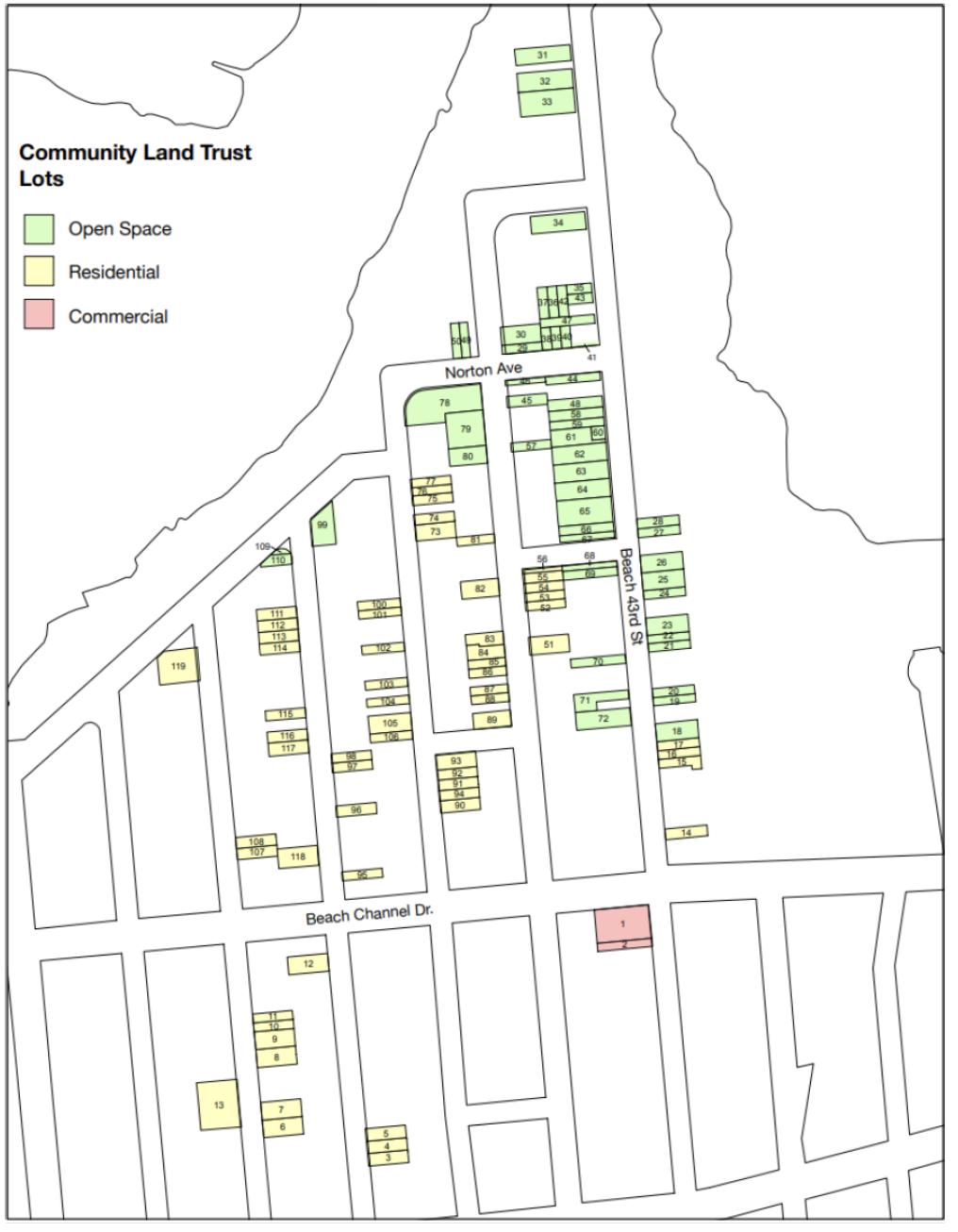
Case Study 4 / 4
Community land trust lots matter because they turn protection into a mechanism, not just a demand.
These patterns point to the core intervention: a policy knowledge tool that links recurring Gowanus conflicts to comparable cases, tactics, and outcomes. The goal is not one perfect fix. It is to help communities see what has worked before and act with better evidence.
Transformation
Transformation is about turning observation into leverage. Gowanus did not lack concern, evidence, or legal effort. What was inconsistent was the jump from public pressure to enforceable policy change. Cleanup, NYCHA repairs, sewer mitigation, affordability protections, and oversight all require different claims, different targets, and different proof. This project organizes interviews, protest archives, planning data, and case studies into demands that agencies, officials, and developers can be made to answer.
Prediction
What matters is the link between tactic, target, and result.
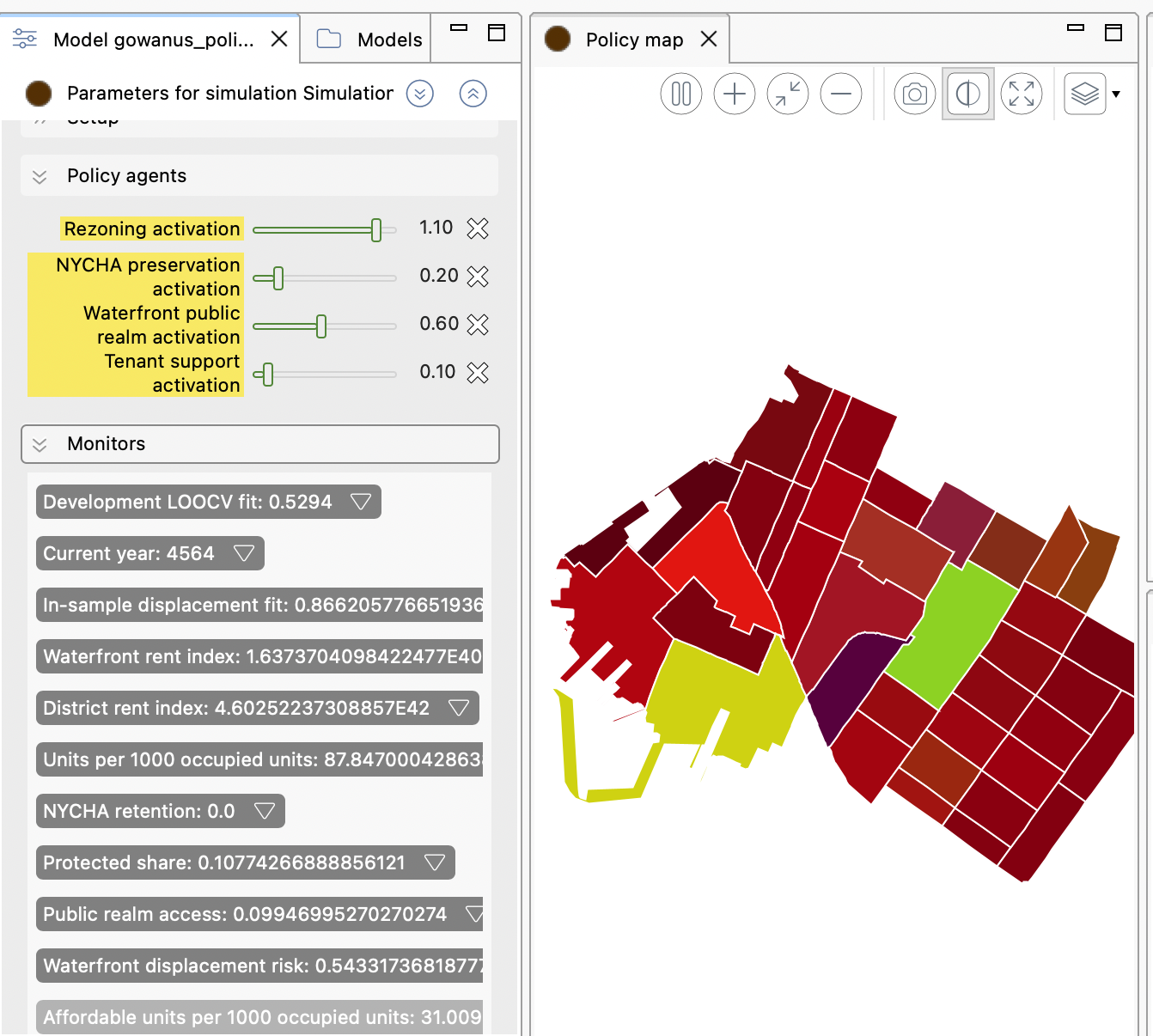
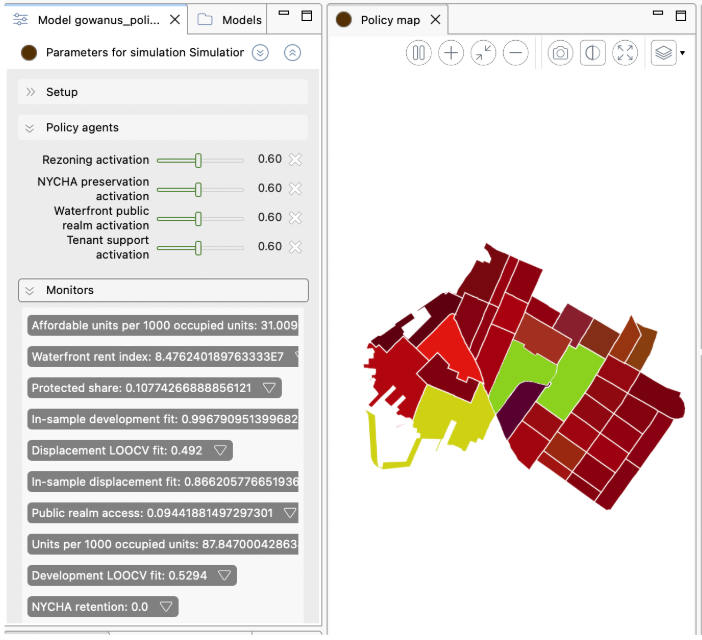
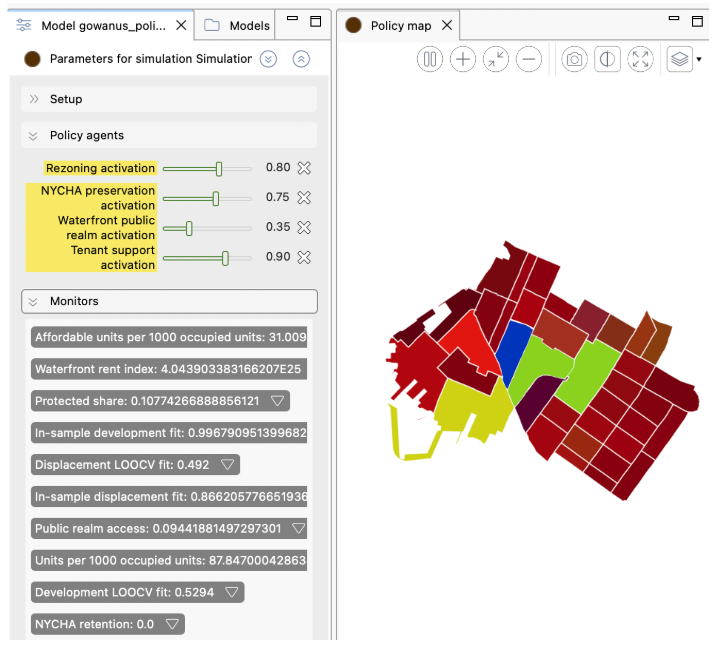
Our prediction phase asks how different governance choices interact over time, using GAMA to simulate four policy agents: rezoning_mih, nycha_preservation, waterfront_public_realm, and tenant_support. Rather than treating these as isolated solutions, the simulation models them as interacting levers shaping development, affordability, displacement, and public realm access. This stays close to the core idea of the project: just as the tool helps communities learn from precedent, the simulation helps show how different policy combinations can produce different futures.
Scenario 1 / 3
Scenario 1 / 3
Housing rises, but public housing support and affordability protections lag. Growth moves faster than the safeguards.
Scenario 2 / 3
Some concessions are won, but not enough to erase redevelopment pressure. Risk is reduced, not removed.
Scenario 3 / 3
Housing still gets built, but policy support is weighted toward existing residents. The point is not no growth. It is growth with stronger safeguards.
Prediction
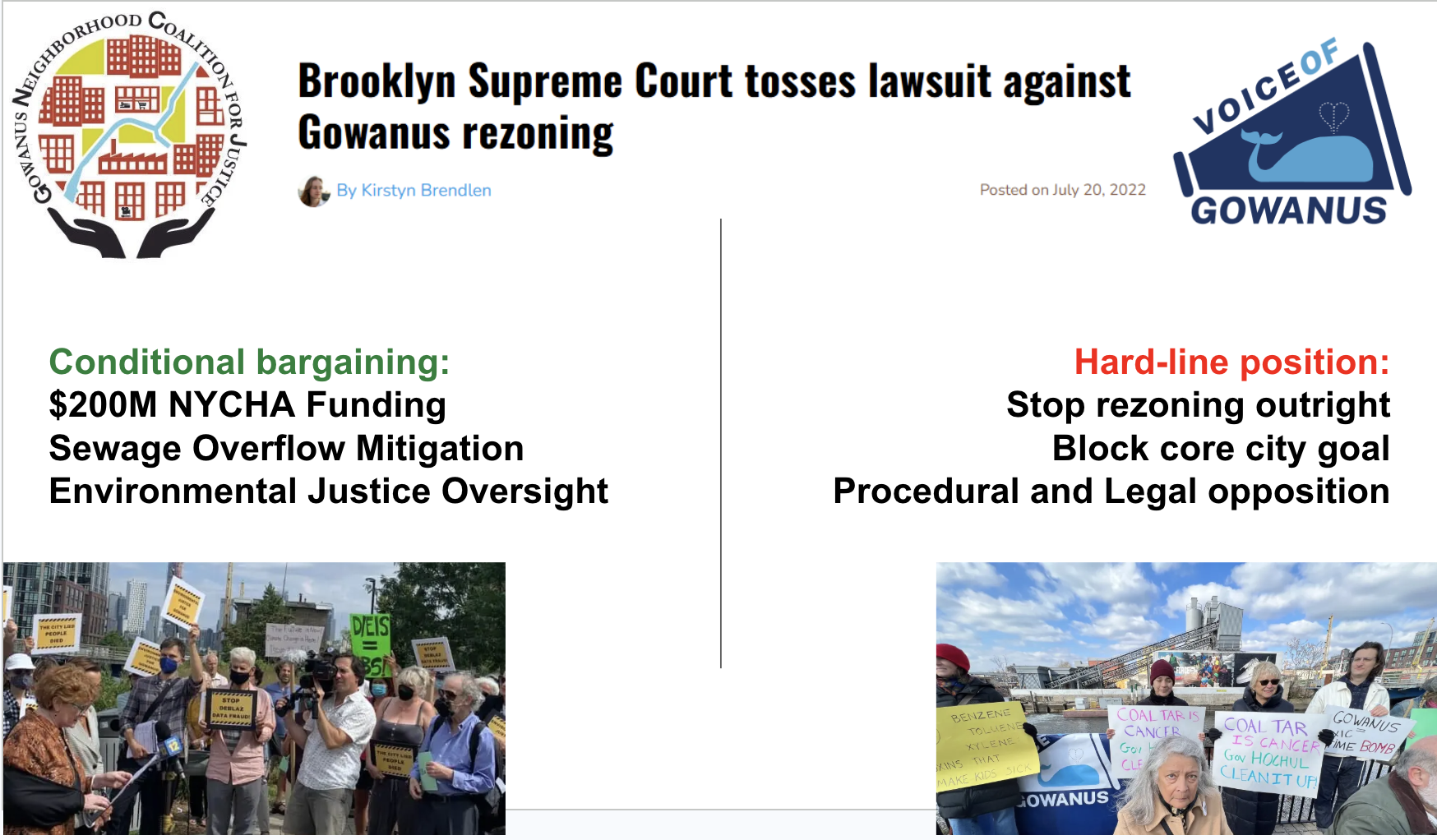
The Gowanus record shows that visible action does not always move policy. Hard-line opposition, procedural resistance, negotiated bargaining, and outcomes tracking each work differently with agencies, courts, and land-use timelines. Some strategies generate attention. Others are better at producing funding, oversight, or infrastructure commitments. The question is simple: what tends to end in delay, dismissal, concession, or a result you can verify?
Consensus
If a tactic cannot be tied to a demand, a decision-maker, and an outcome, it is not yet usable knowledge.
Policy moves when the demand can be measured later.
Visibility matters less than targeting real decision power.
The next fight should start with evidence about what worked.
Consensus
Gowanus does not speak with one voice. Different groups want different things and define success differently. Consensus here means something narrower: a shared way to compare proposals, tactics, concessions, and outcomes without erasing disagreement. The project keeps asking the same question: what did advocacy change, and how confidently can that change be linked to community action? Participation alone is not enough if its effects cannot be checked, stored, and reused.
Precedent
Existing systems each capture only part of the problem. Event databases track protests, advocacy tools track supporter activity, and research projects track outcomes. None link all three into one community-facing civic memory.
Reference 01
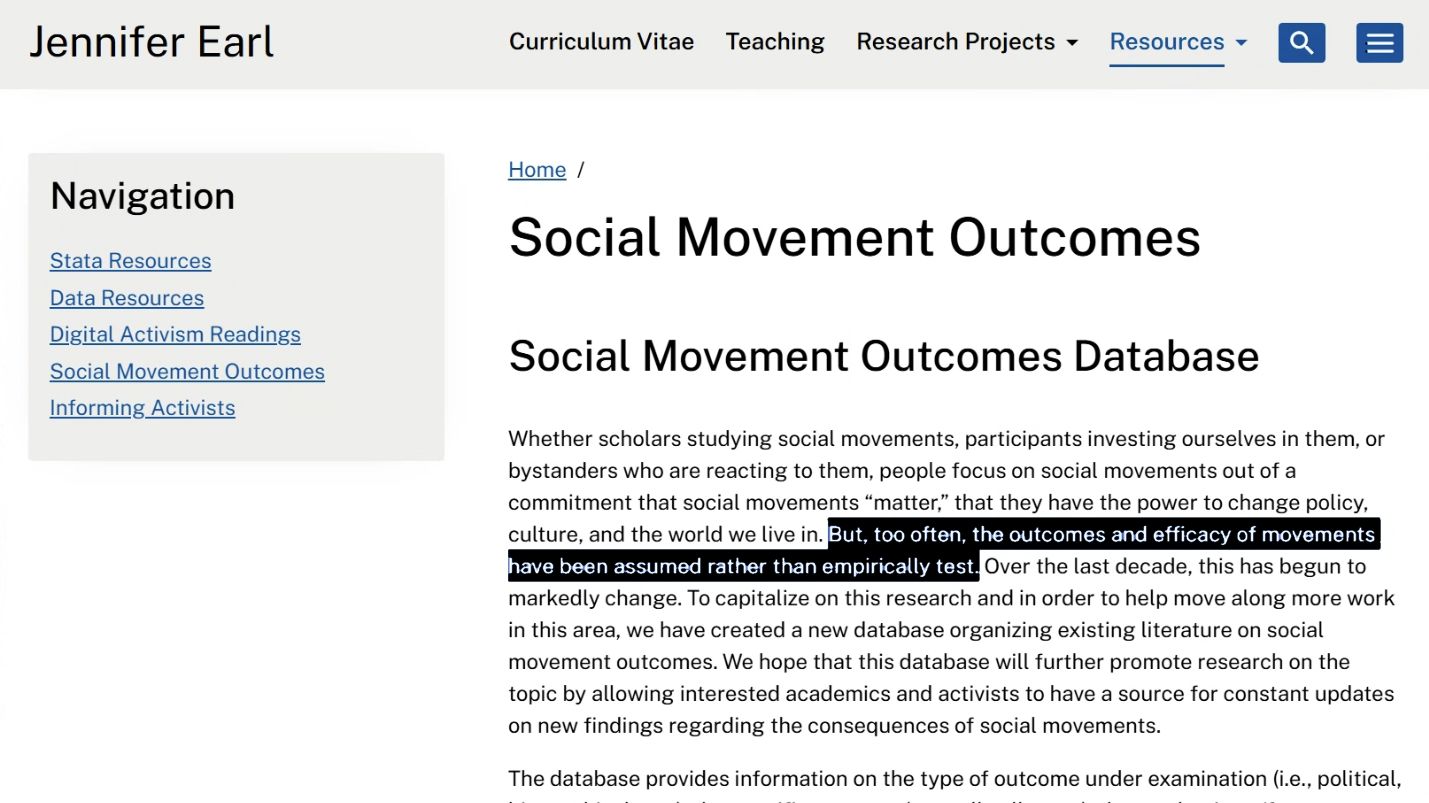
This database shows that movement impacts can be tracked systematically. It treats protest as something that can be studied through tactics, targets, and results.
Reference 02
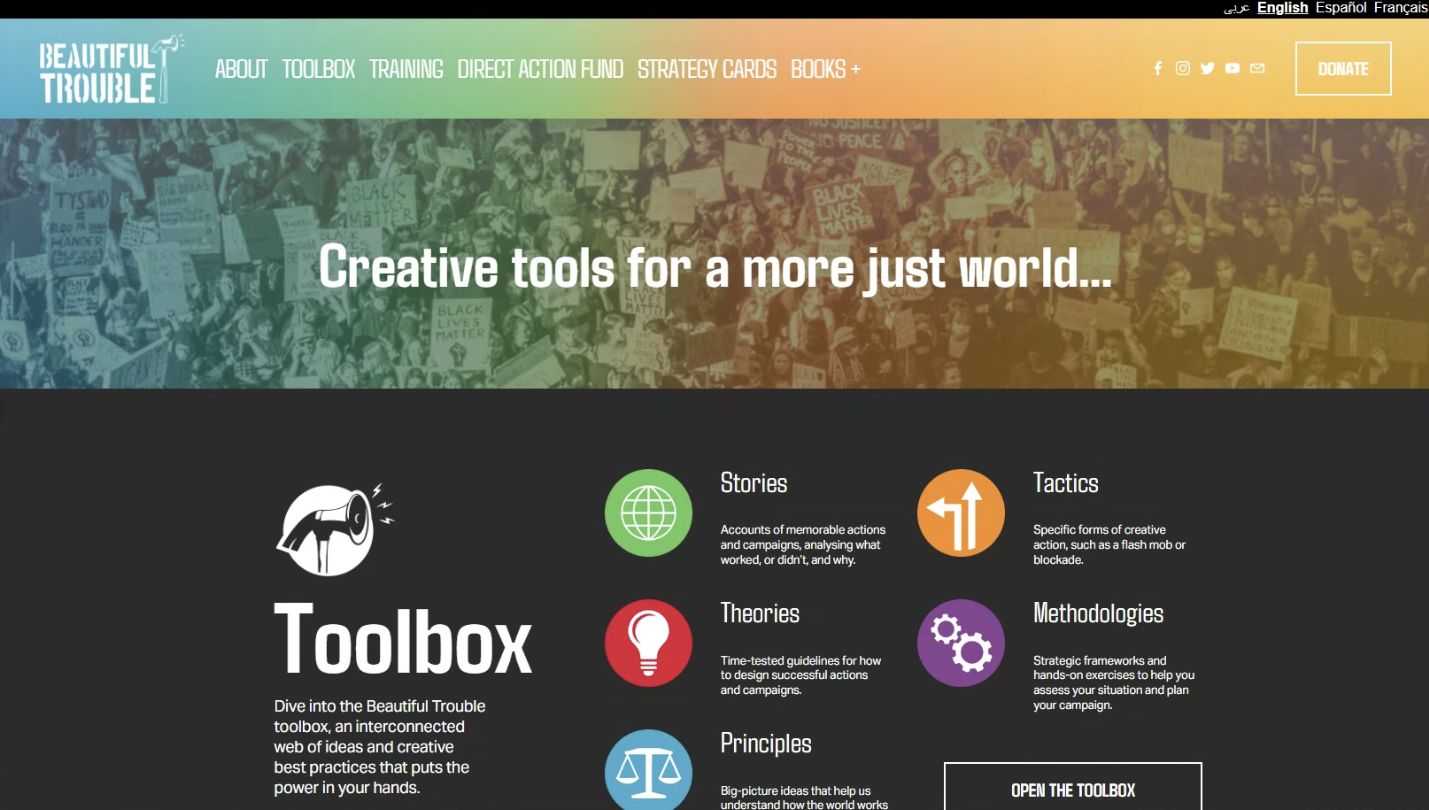
This toolbox makes tactical knowledge reusable. It helps organizers learn from earlier campaigns instead of starting from zero each time.
This project adapts that logic to neighborhood governance. The aim is not just more participation. It is strategic knowledge about what has worked in comparable political contexts.
Atlas
The atlas links proposals, tactics, and outcomes in one place.
Closing
Even within one neighborhood, there is no single community voice. Gowanus includes organizations with different constituencies, goals, and strategies, from hard-line opposition to conditional bargaining to neighborhood stewardship. That matters because this project is not only tracking a place or a policy. It is tracking the different actors trying to shape what counts as success.
Jane Jacobs believed cities should be created by everybody. Gowanus shows that collective voice alone is uneven. Some organizations turn it into concessions, oversight, and funding, while others expend enormous effort and leave with little to show for it. The open question is how participation can accumulate into civic memory, so that future campaigns begin with more knowledge, more leverage, and a clearer path from participation to power.

“Cities have the capability of providing something for everybody, only because, and only when, they are created by everybody.”Jane Jacobs
Source
Gowanus Neighborhood Plan presentation
Source
HPD announces 100 percent affordable housing project in Gowanus
Source
Edgemere, Queens FAQ
Source
Mayor Adams celebrates City Council passage of Resilient Edgemere Community Plan
Source
Great Parks Should Not Uproot Communities
Source
Voices of Gowanus updates archive
Source
Social Movement Outcomes database
Source
Beautiful Trouble toolbox guide
Source
NYC Housing Action Atlas
Source
Mapping Gowanus Today, Imagining Gowanus Tomorrow
Source
Development Gowanus Green Inches Forward
Source
Brooklyn's Deadly Darling: Environmental Remediation, Gentrification, and Resistance to Change the Gowanus Canal
Source
Voices of Gowanus Letters Archive
Source
Gowanus Demographics
[1] CityScope: An Urban Modeling and Simulation Platform
MIT Media Lab publication page · 2022
[2] CityScope documentation introduction
MIT CityScope · 2024
[3] CityScopeAR: Urban Design and Crowdsourced Engagement Platform
MIT Media Lab / CHI 2018 · 2018
[4] CityScope Andorra: A Multi-level Interactive and Tangible Agent-based Visualization
MIT Media Lab / AAMAS 2018 · 2018
[5] Gowanus Neighborhood Plan presentation
NYC Department of City Planning · 2020
[6] HPD announces 100 percent affordable housing project in Gowanus
NYC Department of Housing Preservation and Development · 2020
[7] Gowanus Neighborhood Rezoning
New York City Housing Authority · 2026
NYC Department of Housing Preservation and Development · 2026
[9] Mayor Adams celebrates City Council passage of Resilient Edgemere Community Plan
City of New York · 2022
[10] Great Parks Should Not Uproot Communities
Trust for Public Land · 2024
[11] Voices of Gowanus updates archive
Voice of Gowanus · 2026
[12] Social Movement Outcomes database
Jennifer Earl / University of Delaware · 2018
[13] Beautiful Trouble toolbox guide
Beautiful Trouble · 2026
shl225.github.io · 2026
[15] Mapping Gowanus Today, Imagining Gowanus Tomorrow
Urban Omnibus · 2016
[16] Development Gowanus Green Inches Forward
Brooklyn Paper · 2026
[17] Kings Court Toss Lawsuit on Gowanus Rezoning
Brooklyn Paper · 2026
[18] Gowanus Rezoning on Hold as Court Date Looms
City Limits · 2026
Columbia Journal archive · 2026
[20] Gowanus Lowlands Master Plan
Gowanus Canal Conservancy · 2019
[21] Gowanus Neighborhood Housing Profile
City-Data · 2026
[22] 2020 Census Community District Profiles
NYC Department of City Planning · 2021
[23] Gowanus Debates Proposed Business Improvement District
New York City News Service · 2025
[24] Voices of Gowanus Letters Archive
Google Drive archive shared by Voices of Gowanus · 2026
Point2Homes · 2026